
How to Check Criminal History in Lee County
No one search produces every Lee County criminal record. Begin with the kind of fact you need. The North Carolina eCourts Portal is the first stop for a filed criminal case. Lee Detention is the source for present or released county custody. Sanford Police runs its own Police-to-Citizen system, while Broadway Police takes direct requests. The Lee County Clerk of Superior Court supplies certified county court searches, and the North Carolina State Bureau of Investigation supplies a fingerprint-based review of a person's own statewide history.
| eCourts field | Control | Lee County search use |
|---|---|---|
| Party Name or Case Number | Text | Enter one basic criterion, including a party or exact case identifier. |
| Location | Dropdown | Select Lee County to keep results local. |
| Party or DOB criteria | Text or date | Use an exact date or range to narrow likely matches; public display stays masked. |
| Case Type | Dropdown | Choose Criminal Actions rather than the civil, estate, or special proceeding groups. |
| Case Status | Dropdown | Filter open or disposed results when the available options fit the search. |
| Filing Date From and To | Date range | Reduce a broad result set by the likely filing period. |
Gather a full name, spelling variants, and date of birth when lawfully available. A case number, report number, admit date, or agency name will sharply reduce false matches. Read the scope label before treating any result as complete. The eCourts docket, a jail booking, and an SBI history answer different questions. Follow this order:
- Choose the custodian based on whether the event is a court case, police report, jail booking, warrant, or state supervision record.
- Search the official public source with a name or exact record number, then narrow the location to Lee County where the source permits.
- Open the full result and compare dates, agencies, court numbers, and status fields instead of relying on the first name match.
- Cross-check the next system in the record chain because an arrest charge may change before a court disposition appears.
- Ask the Lee County Clerk or SBI for the proper certified or fingerprint-based product when a public screen is not enough.
The official courthouse page shows Lee County's court records location.
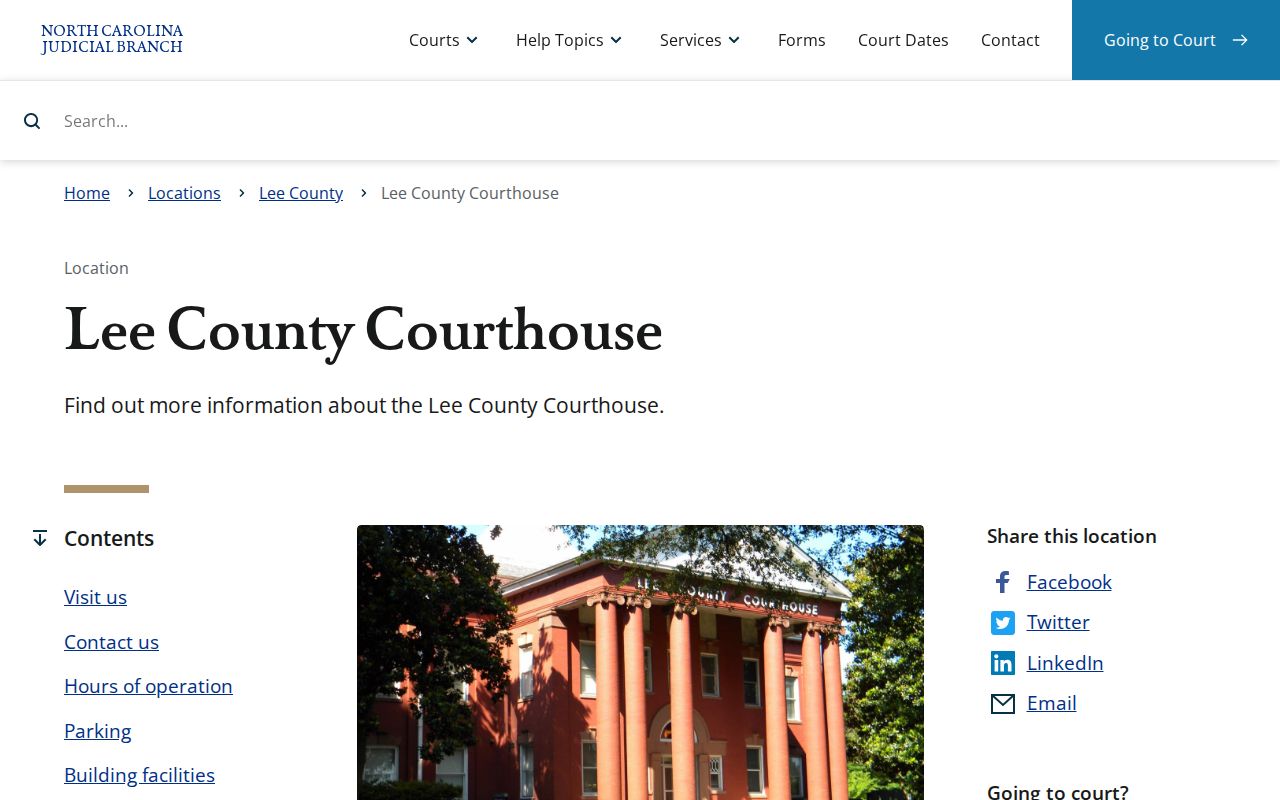
The courthouse remains the key fallback for public terminals, paper files, certified searches, and copies when an online Lee County criminal record is incomplete.
Five Lee County Record Systems
Lee County records move through separate systems. Sanford P2C describes police events created by Sanford officers. The Lee Detention grid shows an intake and custody snapshot. eCourts follows the court case after a charge is filed. SBI groups fingerprint-supported North Carolina arrest cycles and later dispositions when those outcomes are received. NCDAC tracks state prison and community supervision. None replaces the others.
The flow is usually: agency report → Lee County booking → magistrate and charging process → District or Superior Court case → SBI disposition update → NCDAC custody or supervision when applicable. The same offense may have different wording at each stage. That is not always an error. A prosecutor may amend or dismiss a charge, and each custodian updates on its own schedule.
The Lee County Sheriff's Office page identifies the sheriff record contact.
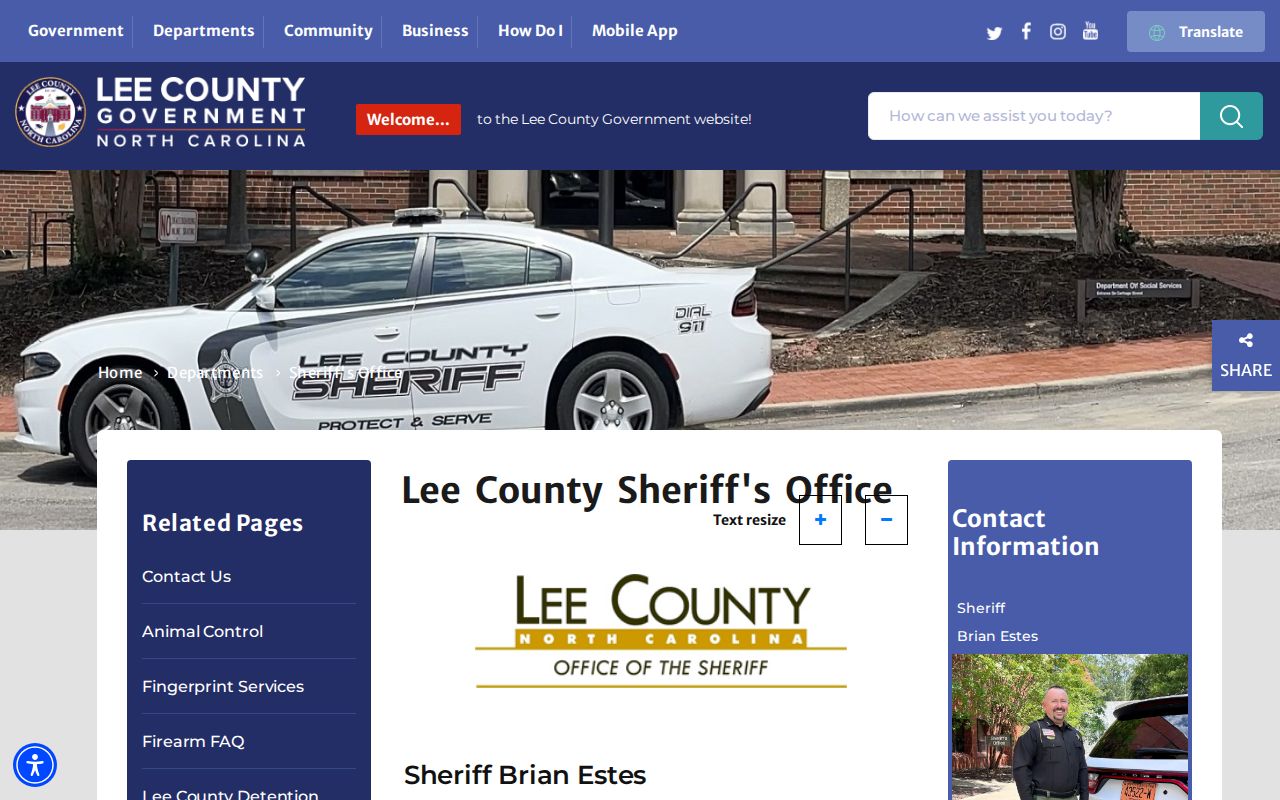
This official source points searchers to the office that creates sheriff reports, while jail and court records remain with their own custodians.
Note: A blank result in one Lee County system does not prove that no related record exists in another official system.
Official North Carolina Background Checks
The North Carolina SBI does not offer a public name-search portal. A person reviewing their own record uses the SBI Right-to-Review process. It requires an original FD-258 ten-print card taken by local law enforcement or another authorized official, a completed request form, and a certified check or money order. The packet goes by mail to the SBI Criminal Information and Identification Section. Results are mailed only to the person whose fingerprints were submitted.
An SBI result covers fingerprint-supported North Carolina arrests and linked dispositions when available. It does not include a national search or events from other states. If an item appears wrong, the subject may submit the SBI written exception process. CIIS then checks the questioned record with the agency that sent it.
Lee County has a different official option. The Clerk of Superior Court can run a certified, county-only name search through form AOC-CR-314. Free courthouse terminal searches and the public eCourts Portal can aid research, but the Judicial Branch does not treat Portal as the official certified background-check product.
Lee County Clerk and SBI Fees
Scope matters as much as price. The Lee County Clerk search is a certified name check of the county court index. SBI Right to Review is the subject's own fingerprint-based North Carolina history. The FBI Identity History Summary adds a separate federal, subject-only layer. Expunction petitions are court filings, not searches, and their fees depend on the statutory route.
| Official product | Verified fee | Coverage or access |
|---|---|---|
| Lee Clerk certified search | $25 | Single-county name search using AOC-CR-314 |
| Courthouse terminal search | Free | Noncertified court search; a print charge may apply |
| SBI Right to Review | $14 | Subject's fingerprint-based North Carolina history, by mail |
| FBI Identity History Summary | $18 | Subject-only federal fingerprint process |
| G.S. 15A-145.5 petition | $52.50 | Qualifying expunction filing, subject to indigency rules |
For a mailed Lee County Clerk payment, use a money order or certified check. The counter accepts cash, card, money order, or certified check, but not personal checks. Card processing fees may apply. These rules for clerk services should not be confused with a law-enforcement report copy charge, which the sheriff does not publish in the inspected sources.
Types of Criminal Records
A Lee County criminal history is built from records with different owners and legal meanings. Police and sheriff files describe the agency event. Lee Detention records a stay in local custody. The court file tracks what prosecutors filed and what the court did. SBI maintains a fingerprint-indexed state history, while NCDAC covers state confinement and supervision. The registry is a separate public safety system maintained by SBI from local sheriff registrations.
- Incident and arrest reports state the agency's account, alleged offense, date, place, and enforcement action.
- Booking records show an admission to Lee County custody, charges, bond, court data, and arresting agency fields.
- Criminal court files contain filed allegations, hearings, events, dispositions, judgments, and financial entries.
- SBI history records group fingerprint-supported North Carolina arrest cycles with outcomes when reported.
- Warrants are judicial process, and active unreturned documents may not be public.
- Custody and supervision files separate Lee County jail status from NCDAC prison, probation, or parole status.
- Registry records disclose information required by Article 27A and are not a general criminal-case search.
Lee County Detention Record Fields
The free Lee County DCN inmate grid covers current and released entries. Its filter row accepts full name, age, race, sex, and admit date. Hidden or adaptive columns can include the primary charge, court type, and arresting agency. The grid returns 100 results per page. Selecting a name opens the booking profile, which is more useful than the brief list view.
A Lee County detention profile may show a booking photograph, Name ID, Local ID, date of birth, age, race, sex, admit date, address, and confining agency. Its charge table can include the offense date, court type, court date, docket number, bond, bond type, charging agency, and arresting agency. A possible bond entry is “No Bond.” The inspected profile did not display an assigned jail unit, release date, magistrate, or physical-description fields beyond basic demographics.
- Admit date
- The date Lee Detention recorded the person entering county custody.
- Docket number
- The identifier that can connect the booking charge to a court case.
- Bond type
- The form or condition attached to release, which may differ from the amount.
- Confining agency
- The agency responsible for the current custody entry.
Superior Court dates do not appear in the jail profile. Lee Detention says court-date information is updated within 48 business hours of receipt. Call the clerk, District Attorney, or magistrate when the roster lacks the needed court detail. A booking entry records custody, not guilt.
What a Lee County Criminal Record Shows
The fields change with the source. An SBI rap sheet begins with identity markers and groups fingerprint-supported arrests by date and agency. A Lee County court file centers on one case number, parties, events, hearings, disposition, judgment, and money due. A booking page centers on one admission. Read the field label and the record date before comparing systems.
| Name & identifiers | Legal name, aliases, birth data, local or SBI identifiers, and other matching details allowed in that source. |
|---|---|
| Arrest or booking data | Agency, admit or arrest date, alleged charge, court type, bond, and custody fields. |
| Case information | Case number, filing date, parties, attorneys, hearings, and public documents. |
| Disposition | The operative court outcome, such as dismissal, acquittal, or conviction. |
| Sentence | Court-ordered confinement, probation, costs, restitution, or other terms when public. |
| Supervision status | NCDAC status for active prison, probation, parole, post-release supervision, or inactive records. |
An arrest charge can be amended, dismissed, or replaced. For the outcome, follow the matching Lee County criminal court case record and read its disposition. If SBI lacks that result, the subject can use the Right-to-Review correction route rather than assuming the arrest remained unresolved.
Lee County Warrants Need Direct Verification
No official public Lee County Sheriff warrant-search page or downloadable active list was found. That gap is important. A missing web result does not prove that no warrant exists. Unreturned process may be restricted, and sealed or juvenile matters will not appear in the usual public tools.
For a warrant tied to Lee County, start with Magistrates at 919-718-6319 for judicial-process questions. Call the Clerk at 919-718-6300 for the related court file, and the Sheriff at 919-718-4560 for service or agency information. eCourts can show public case events. A narrow county GovOS request may help with a public record that has no search tool. Sanford P2C is a post-event police source, not a full outstanding-warrant list.
North Carolina process may include an arrest warrant, an order for arrest after failure to appear, court process, a search warrant, or a fugitive hold. The issuing court and current bond terms control how the matter is resolved. Verify before appearing in person, since an old printout may not reflect current status.
Public Access Laws
North Carolina law starts from public access but preserves specific limits. General county records, court files, police information, criminal-history processing, registry data, and expunction each have their own rules. In Lee County, the practical test is both legal and custodial: the office that holds the original record must decide what can be inspected or copied.
Key statutes:
North Carolina Chapter 132 defines general public records while leaving specific confidentiality laws in force.
G.S. 7A-109 opens clerk records for inspection unless another law or court order restricts access.
G.S. 132-1.4 separates public law-enforcement information from protected investigation and intelligence records.
G.S. 15A-502 governs fingerprints and photographs in criminal processing and helps define SBI coverage.
Chapter 15A, Article 5 controls expunction eligibility, procedure, fees, and the effect of relief.
Juvenile data, victim-sensitive facts, confidential identifiers, unreturned warrants, and active investigative material may be withheld or redacted. Ask for the legally public portion. Public access is not permission to threaten, stalk, intimidate, or harass anyone.
Lee County Record Custodians
Sending a request to the right office saves time. The Lee County Clerk holds court files. The Sheriff holds sheriff-created reports, while Lee Detention maintains booking and custody data. Sanford and Broadway retain their own police records. When no sheriff-specific form or search exists, the county's GovOS public-record request portal is the documented online fallback. A useful request names the incident or booking number when known, the date and place, the creating agency, the exact document, and a preferred format.
The Lee County GovOS portal accepts county public-record requests.
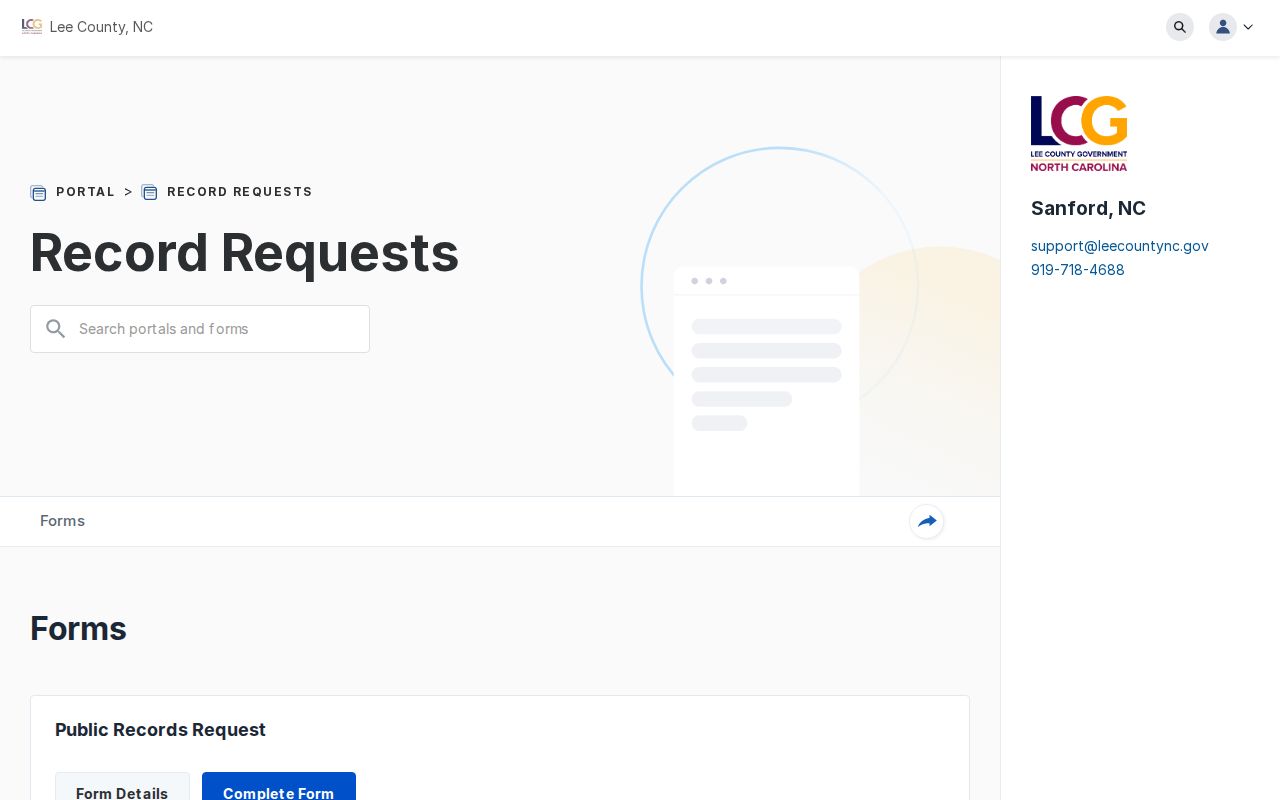
This channel helps when a county record has no dedicated lookup, but it does not move a Sanford Police report or a court pleading away from the office that created it.
Lee County Clerk
1400 South Horner Boulevard
Sanford, NC 27330
919-718-6300
Monday through Friday, 8:00 a.m. to 5:00 p.m.
Lee County Sheriff
1401 Elm Street
Sanford, NC 27330
919-718-4560
sheriff@leecountync.gov
Lee County Detention
1401 Elm Street
Sanford, NC 27330
919-718-4567
Custody and booking questions
Note: The sheriff campus physical address and the detention legal-mail address are different, so confirm the purpose before mailing a record request.
Sealed, Expunged & Restricted
Lee County public searches exclude or mask records that law or court order protects. eCourts does not expose sealed or confidential cases, juvenile matters, unreturned warrants, victim-search entries, or sensitive documents. Public birth dates are masked. Police may disclose basic incident facts while withholding an investigative narrative or protected personal data.
Expunction is a statutory removal process, not a simple Portal edit. When a North Carolina court grants relief, the order routes through court administration and directs named agencies, including law enforcement, NCDAC, DMV, and SBI, to remove covered entries. SBI can remove designated computerized history and fingerprint material, but a North Carolina order does not erase another state's record.
Under G.S. 15A-145.5, key waiting periods include three years for one eligible nonviolent misdemeanor, seven years for multiple eligible misdemeanors, generally ten years for one eligible nonviolent felony, and 20 years for two or three eligible felonies. The clock runs from conviction or completion of the active sentence and supervision, whichever is later. Many serious or listed offenses are excluded. A person should select the current AOC form and exact statutory category before filing with the Lee County Clerk.
Some dismissals and not-guilty or not-responsible outcomes disposed on or after December 1, 2021 enter an automatic expunction process 180 to 210 days after final disposition, subject to exceptions. After relief, check both the clerk or Portal view and SBI Right to Review. If a covered item remains, give the order and discrepancy to that custodian.
Lee County Prison and Supervision Records
County jail custody and state correction records must stay separate. Lee Detention covers local pretrial and short-term custody. After a sentenced person enters state custody, the North Carolina Department of Adult Correction becomes the source. Its Offender Public Information search also covers state-run community supervision, including probation and older parole or post-release records.
The NCDAC Offender Search provides prison and supervision filters.
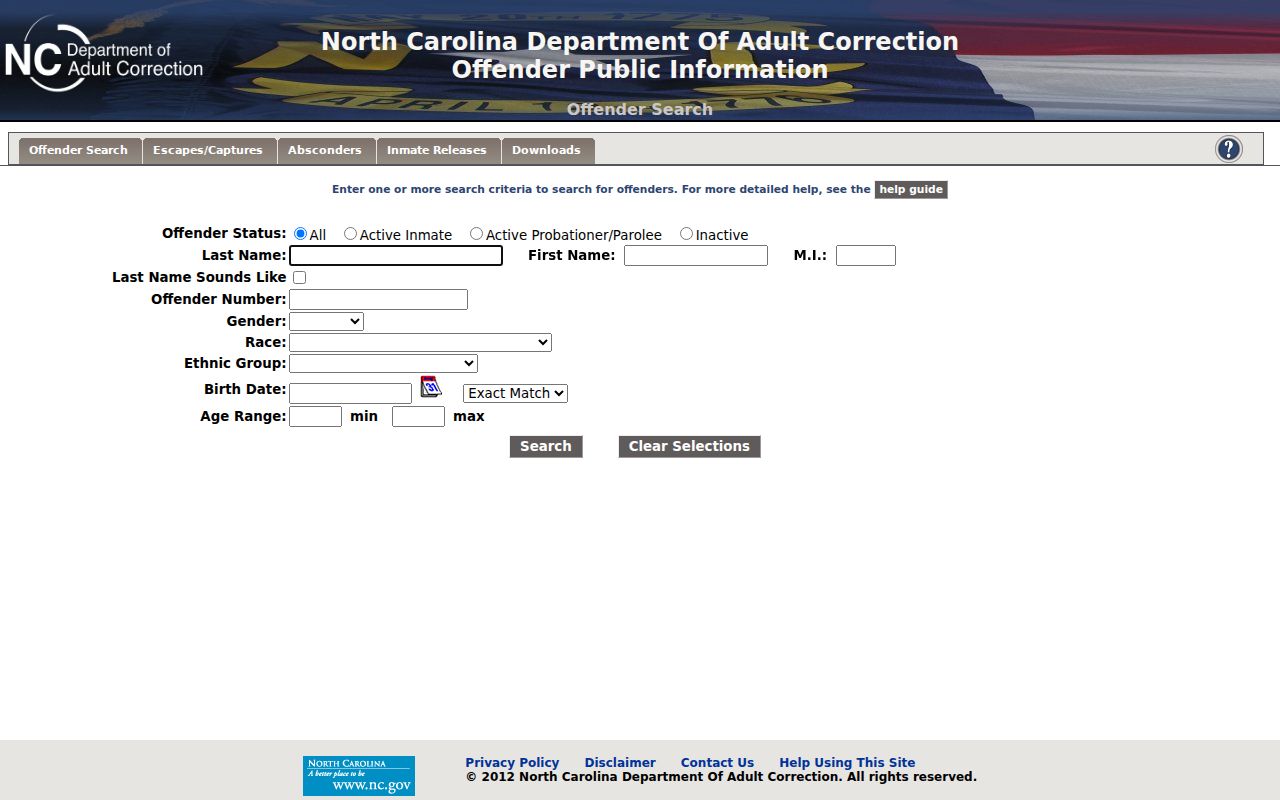
The “Active Probationer/Parolee” choice is the best official status filter for a person supervised in the community, while “Inactive” means the person was once in an NCDAC category but is no longer active.
Search fields include first, middle, and last name, a Sounds Like option, offender number, gender, race, ethnic group, birth date or range, and age limits. All entered criteria must match. A partial name prefix works, but an offender number is faster, and leading zeros may be left off. For Lee County questions not shown online, the local supervision number is 919-776-0639. Court probation events and violation hearings can also appear in eCourts.
Criminal Records by City in Lee County
Lee County has only two incorporated municipalities. Sanford and Broadway each create police records, but neither has a municipal court because North Carolina uses one unified state court system. Sanford offers P2C for public police events. Broadway has no official online police blotter, so its route starts with the police office and a Town Hall written-request fallback. Criminal charges from both municipalities move to District or Superior Court in Lee County.
Sanford Criminal History
Population 32,813 · Police reports use Sanford P2C, with county jail and Lee court follow-up.
Broadway Criminal History
Population 1,392 · Police requests begin by phone, then route to Lee custody and courts as needed.
Lee County Criminal Record Context
Official SBI figures place Lee County's 2024 index-crime rate at 1,653.6 per 100,000 residents, compared with 1,567.5 in 2023. The 2024 violent rate was 129.3, while the property rate was 1,524.3. These measures count offenses reported through the state's crime program. They are not conviction totals and do not predict any person's record.
Sanford Police reported 863 index offenses for 2024: 56 violent and 807 property offenses. Broadway Police reported 19 index offenses, all in the listed property categories. Agency participation, population, and report quality affect comparisons, and a small annual count can change sharply. Use these figures to understand the scale of local reporting, not to infer what a named person did.
Lee County court calendars add another local layer. Separate sessions are published for DWI, Criminal Domestic Violence, Probation Cause, Probation Violation, Bond Forfeiture, and Disposition matters. Community Support Services also connects pretrial, diversion, re-entry, and behavioral-health work. Those programs can shape a case path, but the court docket remains the source for the filed outcome.