
Criminal Cases in Lee County Courts
Lee County belongs to Prosecutorial, Superior Court, and District Court District 12. Superior Court tries felony cases and hears appeals of misdemeanor and infraction matters. District Court tries misdemeanors and infractions, and it handles the first stages of felony cases. Both courts sit at the Lee County Courthouse. North Carolina uses one state court system, so neither Sanford nor Broadway keeps a separate municipal criminal docket.
The Lee County court office identifies the Clerk of Superior Court as custodian of local criminal case files. A Lee County court record is organized around its case number, not the jail booking number or police report number. The file may start with a complaint or other charge, then grow as the judge, prosecutor, defense, and clerk add hearings, motions, orders, pleas, and a final result.
District Court handles early felony steps before a felony trial moves to Superior Court. This split explains why one Lee County criminal case may show several hearing types or assignments. The court label reflects the stage and charge level, not a second prosecution.
Lee County Criminal Calendars
Lee County publishes sessions for Criminal Domestic Violence, DWI, Bond Forfeiture, Disposition, Probation Cause, and Probation Violation matters. Those names are useful clues when a Register of Actions uses a hearing label that is not clear at first glance. A Disposition session seeks case resolution. A Probation Violation session addresses claimed breaches of court-ordered supervision. A bond-forfeiture entry deals with bond consequences and is not itself a finding on the criminal charge.
The county also runs Administrative Traffic Court on scheduled dates. It is a disposition setting, not a trial. A contested matter is set for later proceedings. Searchers should match the calendar name, case number, and courtroom rather than infer an outcome from the session label alone.
Note: A calendar shows that a matter is scheduled; the later docket entry shows whether the hearing occurred and what the court decided.
How to Search Case Records
The free North Carolina eCourts Portal is the main internet channel for public Lee County criminal dockets. Search by party name or Enterprise Justice case number, then limit Location to Lee County and Case Type to Criminal Actions. Portal results can reach 200, so add filing dates, status, or other supported criteria when a common name returns too much.
- Open Smart Search and choose a party name or case number as the basic criterion.
- Set Location to Lee County and use Criminal Actions as the case type.
- Add status, filing dates, or date-of-birth criteria when the result set is broad.
- Open the clickable case number and read events, hearings, dispositions, judgments, and financial entries in sequence.
- Use a courthouse terminal, inspect the paper file, or request certified output from the Lee County Clerk when Portal is incomplete or official proof is needed.
The Judicial Branch Portal training page shows the controls used in Smart Search.
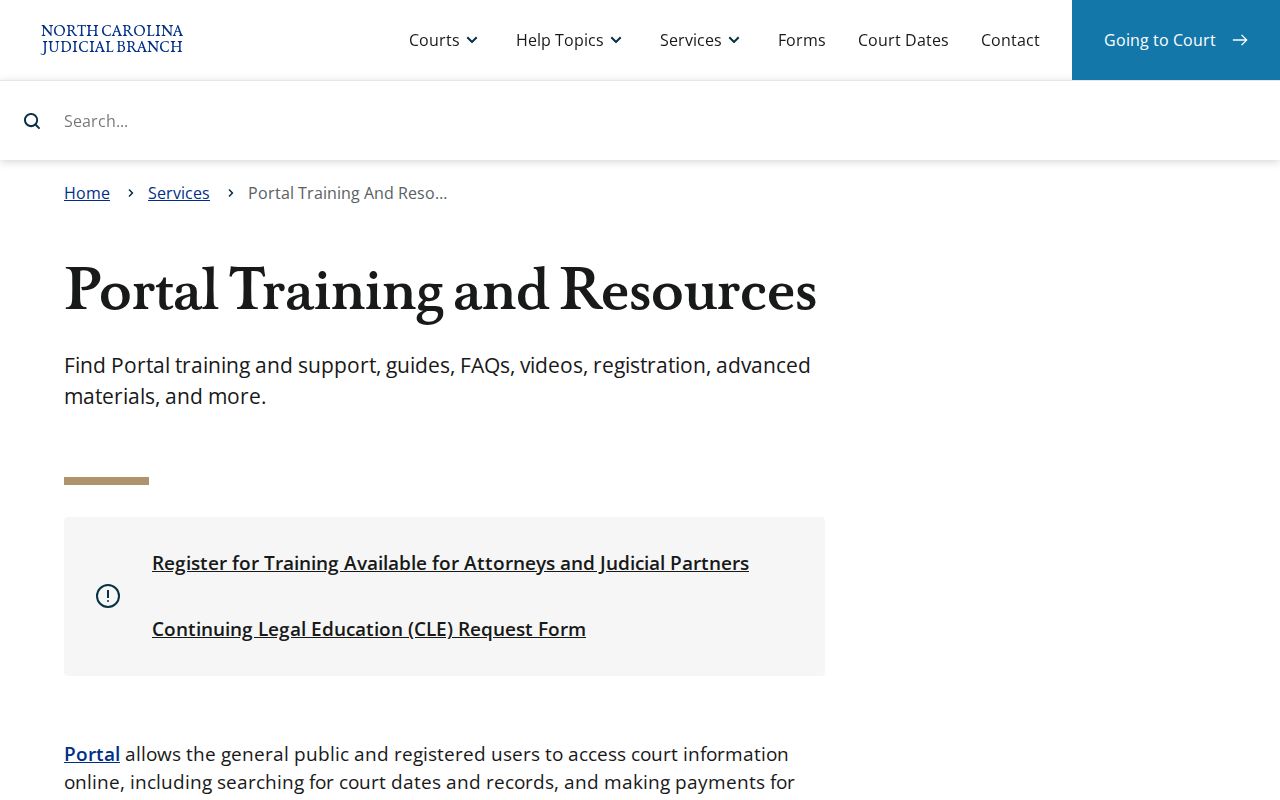
The interface supports a precise case-number search as well as a filtered party search, which helps separate similarly named Lee County cases.
| Field or Control | Type | Required | Lee County Search Notes |
|---|---|---|---|
| Party Name or Case Number | Text | One basic criterion | Supports names, cases, citations, attorneys, businesses, cross-references, and nicknames |
| Location | Dropdown | No | Select Lee County |
| Party or DOB | Text or date | No | Exact date or range; public birth dates stay masked |
| Case Type | Dropdown | No | Select Criminal Actions |
| Status and Filing Dates | Dropdown and dates | No | Narrows a large result set |
| Hearing Search Type | Dropdown | Yes for hearing search | Case, party, business, attorney, judicial officer, or courtroom |
Lee County Case Portal Traps
A blank search is not enough to prove that no Lee County criminal case exists. Check spelling, remove an over-narrow date filter, and try the Enterprise Justice number. A case number follows a year, case-type letters, six-digit sequence, and three-digit county identifier. Wildcards also have limits: a case wildcard needs four characters before the asterisk, while a name wildcard needs three last-name characters and one first-name character.
Portal data is near real time, yet restricted records and migration details can change what appears. Events converted from an older system may carry a 12:00 a.m. placeholder time. That time does not show that court met at midnight. Sealed matters, confidential documents, juvenile files, and victim-search entries are not public Portal results.
North Carolina finished statewide eCourts conversion in October 2025. For an uncertain result, the public terminal and paper file remain strong fallbacks. The clerk can also explain whether a public record exists outside the web view.
What the Case File Shows
A case file follows one prosecution. It can show the original allegation, later amendments, hearing history, final disposition, judgment, and financial obligations. The arresting agency's report and Lee Detention booking record are separate files. The Lee County criminal court case record is the best source for what charge was filed and how the court resolved it.
| Case Number and Court | Identifies the Lee County file, trial division, location, filing date, status, and assignment. |
|---|---|
| Charges | Lists filed allegations, offense description, and classification; these may differ from arrest charges. |
| Parties and Attorneys | Names public case participants and counsel, while victim identity is not searchable as a party. |
| Case Events | Records filings, motions, orders, and docket activity in date order. |
| Hearings | Shows date, type, courtroom, and judicial officer when public and populated. |
| Disposition and Judgment | States the court result, sentence, bond data where present, and financial entries. |
Portal may offer public documents to view or print without a document fee. Certified copies still come from the clerk. Public birth dates are masked, and a downloadable document may be absent even when its docket event is visible.
Lee County Criminal Disposition Terms
Read the disposition field before drawing a conclusion from the charge. A charge describes the allegation. The disposition states how it ended. North Carolina court terms can be compact, so these plain meanings help when reviewing a Lee County docket.
- Dismissal
- The charge ended without a conviction.
- Acquittal
- A judge or jury returned a not-guilty result.
- Nolle prosequi
- The prosecutor chose not to proceed with that charge.
- Conviction
- Guilt was established by plea or verdict.
- Disposition
- The final or operative outcome entered in the case.
- Expunction
- A statutory process that removes eligible records from ordinary public access.
A dismissal, acquittal, and expunction are not synonyms. The first two are case outcomes. Expunction is separate relief under North Carolina law and can require the affected custodians to remove covered entries.
Stages of a Criminal Case
Criminal case records build over time. An initial charge may start in District Court, even when a felony will later be tried in Superior Court. Pretrial events can address counsel, bond, evidence, scheduling, or motions. A plea can resolve the matter without trial. If a trial occurs, the verdict leads to a judgment and, after conviction, sentencing.
Case flow: Charges Filed → Arraignment → Pretrial → Plea or Trial → Disposition → Sentencing
Not every Lee County case uses every step. Charges may be dismissed, replaced, or resolved before trial. The Register of Actions is the best timeline because it records what actually happened instead of what was first expected.
Lee County Criminal File Access
The North Carolina court structure shows the unified system that serves Lee County criminal cases.
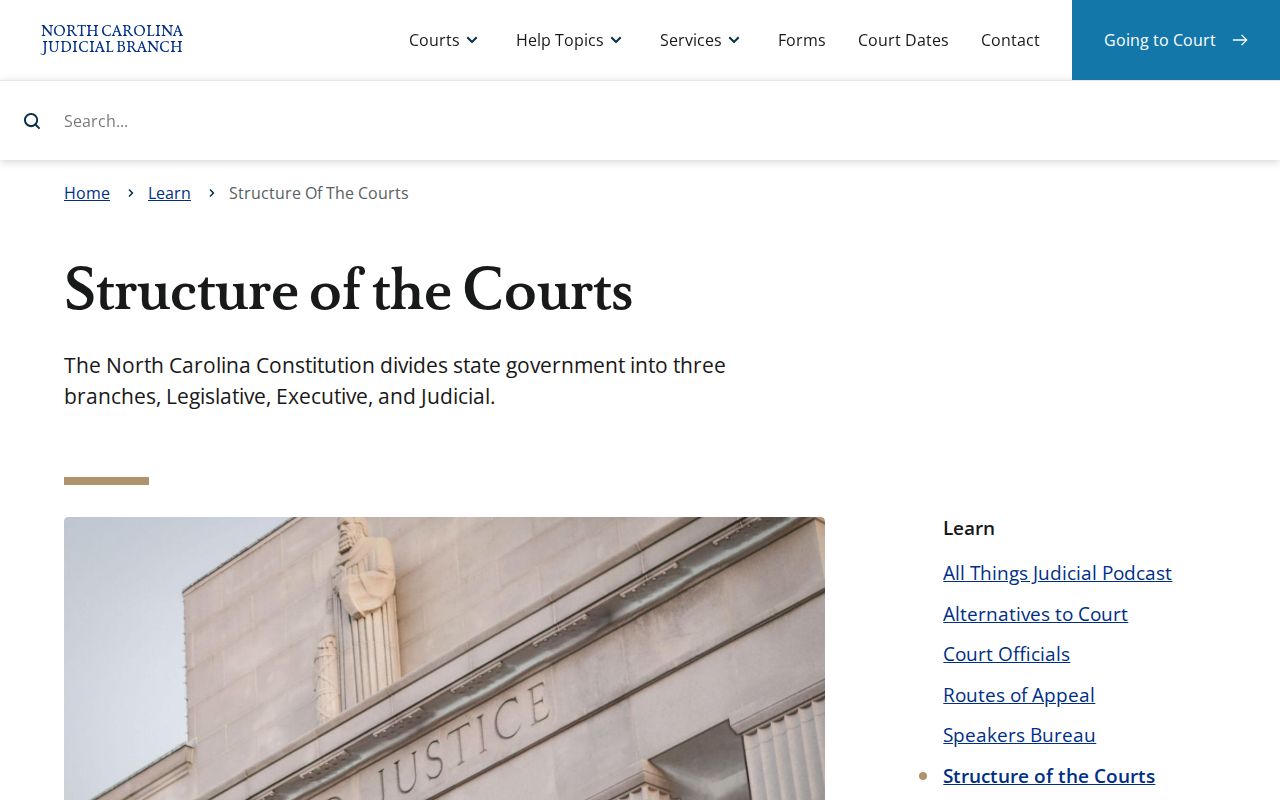
The unified structure explains why Lee County case files from Sanford and Broadway are kept through the same District and Superior Court system.
Visit the Clerk of Superior Court at 1400 South Horner Boulevard, Sanford, North Carolina 27330, Monday through Friday from 8:00 a.m. to 5:00 p.m. The main number is 919-718-6300. Public terminals at any North Carolina courthouse offer free noncertified searches by defendant name, case number, or victim or witness name. Users can view or email records, though printing may cost.
Lee County Clerk of Superior Court
1400 South Horner Boulevard
Sanford, NC 27330
919-718-6300
Monday through Friday, 8:00 a.m. to 5:00 p.m.
A certified single-county name search uses form AOC-CR-314 and costs $25. It can be requested at the counter or mailed to P.O. Box 4209, Sanford, NC 27331. Mail payment is by money order or certified check. The counter accepts cash, card, money order, or certified check, but not personal checks. Paper case files must be inspected through the clerk in the county holding the case.
Access & Restrictions
G.S. 7A-109 makes clerk records open for public inspection unless another law or court order restricts them. That rule does not make every document public. Juvenile cases, sealed or expunged records, confidential filings, protected victim information, and unreturned process can be withheld from ordinary access.
The public web view may also be narrower than the clerk's paper file. A masked birth date, missing document image, or absent victim entry is a privacy control, not proof that the underlying case field never existed. Ask the clerk about the public portion when a known Lee County case does not appear online.
Public record rule: North Carolina Public Records Law applies broadly, but the court-specific access rule and confidentiality laws control what the Lee County Clerk may release.
Lee County Criminal Court Routing
The North Carolina court structure confirms there are no local municipal court systems.
That fact matters when a police citation begins in Sanford or Broadway. The city police agency may hold the incident report, but the criminal prosecution belongs in Lee County District or Superior Court. Searching a city website for a municipal docket will miss the controlling file.
Start with Portal for the public docket. Use the Lee County Clerk for a terminal search, paper file, copy, or certified record. Contact the investigating agency only for its own report. Keeping those custodians separate prevents an arrest allegation from being mistaken for the court's final judgment.